
Introduction to Email Marketing
Email marketing remains one of the most potent tools in a business’s digital arsenal. This direct communication channel connects businesses with their audience in a personal, measurable way that few other marketing methods can match.
Despite the rise of various marketing platforms, email continues to deliver exceptional results. It creates a direct line to your customers’ inboxes, providing opportunities for personalized messaging that can drive engagement, build relationships, and generate sales.
But what makes email marketing truly stand out?
Its versatility. From small startups to global enterprises, organizations of all sizes use email to nurture leads, announce new products, share content, and maintain customer relationships.
And the numbers don’t lie. The facts speak for themselves.
The Power of Email Marketing
Why Email Marketing Still Matters
In a world of fleeting social media posts and algorithm changes, email marketing provides stability. Your message goes directly to subscribers who have actively chosen to hear from you.
This permission-based marketing approach creates a foundation of trust. When someone gives you their email address, they’re inviting you into their personal space. This invitation is invaluable.
Email marketing also gives you complete control over your communication channel. Unlike social media platforms where your content competes with countless others, email delivers your message straight to your audience without intermediaries.
The personalization capabilities of email marketing surpass many other channels. You can tailor messages based on customer behavior, preferences, demographics, and position in the buying journey.
ROI and Statistics
The return on investment for email marketing is outstanding. For every $1 spent on email marketing, businesses can expect an average return of $36. This remarkable ROI outperforms nearly all other marketing channels.
Open rates across industries average around 21.5%, with click-through rates of approximately 2.3%. These engagement metrics demonstrate that subscribers are actively consuming email content.
Conversion rates tell an even more compelling story. Email marketing conversion rates can reach 15.11% for targeted campaigns, significantly higher than social media and display advertising.
Email marketing drives 15% of all online sales, making it a crucial revenue generator for e-commerce businesses.
Approximately 99% of consumers check their email daily, with some checking multiple times throughout the day. This consistent engagement creates numerous opportunities to connect with your audience.
Comparison with Other Marketing Channels
Email marketing offers distinct advantages over other channels. Unlike paid advertising, which requires continuous investment to maintain visibility, email marketing allows you to communicate with your audience at minimal cost after building your list.
Social media marketing, while valuable for brand awareness and community building, faces decreasing organic reach due to algorithm changes. Email deliverability, when managed properly, remains more stable and predictable.
Content marketing and email marketing work synergistically. Your content strategy feeds your email campaigns, while email amplifies your content’s reach and impact.
Search engine optimization drives new visitors to your site, but email marketing excels at nurturing these visitors into customers and maintaining relationships after the initial conversion.
The tracking capabilities of email marketing provide clearer attribution than many other channels, allowing you to directly measure the impact of your campaigns on sales and engagement.
Building Your Email List
Opt-in Strategies
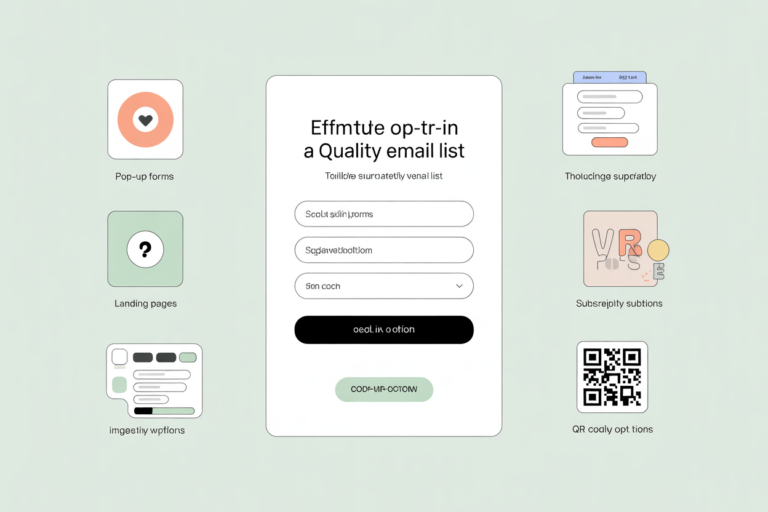
The foundation of successful email marketing lies in building a quality list of subscribers who genuinely want to hear from you. Implementing effective opt-in strategies is essential for list growth.
Website sign-up forms should be strategically placed throughout your site. Consider adding them to your homepage, blog sidebar, about page, and footer. Each location captures visitors at different stages of engagement.
Pop-up forms, when used thoughtfully, can significantly increase subscription rates. Time-based pop-ups (appearing after a certain duration on site), exit-intent pop-ups (triggering when someone moves to leave), and scroll-based pop-ups (showing after a visitor has consumed a certain amount of content) can all be effective.
Landing pages dedicated to email sign-ups allow you to focus your message on the benefits of subscribing without distractions. These pages can be promoted through various channels to drive subscription growth.
Social media channels provide opportunities to promote your email list. Regular posts highlighting the value of your email content can drive followers to become subscribers.
In-person events, whether virtual or physical, offer opportunities to collect email addresses from engaged prospects. QR codes linking to sign-up forms can streamline this process.
Lead Magnets That Convert
Lead magnets incentivize email sign-ups by offering immediate value. The most effective lead magnets address specific pain points or desires of your target audience.
E-books and guides provide in-depth information on topics relevant to your audience. These downloadable resources demonstrate your expertise while delivering practical value.
Checklists and templates offer immediately applicable tools that simplify processes for your audience. Their practical nature makes them highly desirable lead magnets.
Free trials or samples of your product or service give prospects a taste of what you offer, building trust and demonstrating value before asking for a purchase.
Webinars and video training combine educational content with a personal connection, making them powerful lead generation tools. The registration process naturally collects email addresses.
Quizzes and assessments engage users while collecting valuable information about their needs and preferences. The results can be delivered via email, facilitating the subscription process.
Discount codes and special offers appeal directly to purchase motivation, making them particularly effective for e-commerce businesses looking to build their lists.
Quality vs. Quantity in List Building
The quality of your email list ultimately determines your success. A smaller list of engaged subscribers will outperform a large list of uninterested contacts.
Focus on attracting subscribers who align with your target audience. These individuals are more likely to engage with your content and convert into customers.
Regular list cleaning removes inactive subscribers and improves overall engagement metrics. This process involves removing contacts who haven’t opened emails for an extended period, typically 6-12 months.
Engagement signals like open rates, click-through rates, and conversion rates provide insights into list quality. Monitor these metrics closely to assess the health of your email marketing program.
Double opt-in processes, while potentially reducing initial sign-up numbers, ensure higher-quality subscribers by requiring confirmation of subscription intent. This additional step filters out incorrect email addresses and casual sign-ups.
Email Marketing Strategy Development
Setting Clear Goals
Effective email marketing begins with defined objectives. Common goals include driving sales, nurturing leads, increasing website traffic, boosting engagement, or strengthening customer relationships.
Each goal requires different metrics for measurement. Sales-focused campaigns track revenue and conversion rates, while engagement campaigns monitor open rates, click-through rates, and reply rates.
Your goals should align with broader business objectives. Email marketing goals should support your company’s overall mission and strategic direction.
Timeframes for goal achievement must be established. Short-term goals might focus on immediate sales or engagement, while long-term goals could address customer lifetime value or retention rates.
Document your goals and share them with stakeholders to ensure alignment across your organization. This transparency helps maintain focus and accountability.
Understanding Your Audience
Deep knowledge of your audience forms the foundation of effective email marketing. Develop detailed buyer personas that capture demographics, psychographics, needs, challenges, and communication preferences.
Customer journey mapping identifies the various stages prospects move through before, during, and after purchase. Different email approaches are needed at each stage.
Conduct surveys and interviews to gather direct feedback from your audience about their preferences and needs. This primary research provides invaluable insights for message development.
Analyze customer data to identify patterns and preferences. Purchase history, website behavior, and previous email engagement can reveal significant insights about your audience’s interests.
Social listening provides additional context about your audience’s concerns, questions, and language. Monitoring social media conversations can uncover valuable topics for email content.
Segmentation Techniques
Segmentation divides your email list into smaller, more targeted groups based on specific criteria. This approach allows for more personalized and relevant messaging.
Demographic segmentation uses characteristics like age, gender, location, and income to tailor messages. These basic attributes often influence preferences and needs.
Behavioral segmentation groups subscribers based on their actions, such as purchase history, website visits, or previous email engagement. This approach allows you to respond directly to demonstrated interests.
Interest-based segmentation divides your list according to specific topics or products subscribers have expressed interest in. This can be determined through survey responses, clickthrough behavior, or content consumption patterns.
Customer lifecycle segmentation recognizes that different messaging is appropriate for prospects, new customers, repeat customers, and inactive customers. Each group requires a distinct communication approach.
Engagement-level segmentation separates highly engaged subscribers from those who rarely interact with your emails. This allows you to send re-engagement campaigns to inactive subscribers while maintaining regular communication with engaged ones.
Crafting Effective Email Content
Subject Line Best Practices
Subject lines determine whether your emails get opened or ignored. They deserve significant attention and testing.
Keep subject lines concise, ideally under 50 characters to ensure they display fully on mobile devices. Every word should earn its place.
Create a sense of urgency or curiosity without resorting to clickbait tactics. Genuine urgency motivates opens, while misleading subject lines damage trust.
Personalization in subject lines, including the recipient’s name or reference to their specific interests, can increase open rates by up to 26%.
A/B testing subject lines allows you to optimize based on actual audience response rather than assumptions. Test variables like length, personalization, questions vs. statements, and emotional appeals.
Avoid spam trigger words and excessive punctuation that might send your message to the junk folder. Terms like “free,” “guarantee,” and “act now” combined with multiple exclamation points can trigger spam filters.
Email Copy That Converts
Effective email copy speaks directly to the reader’s needs and motivations. Address the recipient as “you” and write as if speaking to an individual, not a crowd.
Begin with your most important message. Many readers scan emails quickly, so front-loading key information ensures it gets seen.
Focus on benefits rather than features. Explain how your offering improves the reader’s life or solves their problems instead of simply listing specifications.
Use short paragraphs and sentences to improve readability. White space makes your email less intimidating and easier to consume, particularly on mobile devices.
Include a clear, compelling call to action that stands out visually and tells the reader exactly what you want them to do next. Limit each email to one primary CTA to avoid confusion.
Write in a conversational tone that builds relationship and trust. Your emails should sound like they come from a helpful human, not a corporate entity.
Tell stories that illustrate your points and create emotional connection. Narrative is one of the most powerful ways to engage readers and make your message memorable.
Visual Elements and Design
Email design should enhance your message rather than distract from it. Clean, mobile-responsive layouts provide the best foundation for effective communication.
Brand consistency in colors, fonts, and imagery helps recipients instantly recognize your emails and builds visual identity over time.
Images should serve a purpose, whether illustrating concepts, showing products, or evoking emotions. Always include alt text for images to maintain meaning when images don’t load.
White space creates visual breathing room that makes your email easier to scan and digest. Don’t overcrowd your design with too many elements.
Buttons for calls to action typically outperform text links, especially on mobile devices where they provide larger touch targets for fingers.
Font choices affect both readability and brand perception. Stick to web-safe fonts or provide fallbacks to ensure your message displays properly across email clients.
Email Campaign Types
Welcome Sequences
Welcome emails set the tone for your relationship with new subscribers. They receive 4 times more opens and 5 times more clicks than standard marketing emails.
A well-designed welcome sequence gradually introduces new subscribers to your brand, products, and content. This measured approach prevents overwhelming new contacts with too much information at once.
The first email should deliver any promised lead magnet, thank the subscriber for joining, and set expectations for future communications. This immediate value fulfillment builds trust.
Subsequent emails can share your brand story, highlight popular products or content, explain key benefits of your offerings, and encourage small engagement actions that deepen the relationship.
Many successful welcome sequences conclude with a special offer that incentivizes the first purchase. This conversion opportunity comes after you’ve built familiarity and trust through previous messages.
Promotional Campaigns
Promotional emails directly drive sales or conversions. They announce new products, special offers, sales events, or limited-time opportunities.
Effective promotional emails create a sense of urgency through limited-time offers or limited-quantity availability. This motivational trigger encourages immediate action.
Clear value propositions explain exactly why the recipient should take advantage of your offer. Focus on specific benefits and problem-solving capabilities.
Social proof in the form of testimonials, reviews, case studies, or usage statistics builds credibility and reduces purchase hesitation.
Visual showcase of products using high-quality images or videos helps recipients visualize ownership, an important step in the purchase decision process.
Multiple call-to-action placements throughout longer promotional emails ensure conversion opportunities remain visible regardless of how much of the email the recipient reads.
Nurture Sequences
Nurture emails build relationships with prospects who aren’t ready to buy immediately. They provide value through education, insights, and helpful content while keeping your brand top of mind.
Educational content that addresses common questions and challenges positions your brand as a helpful authority. This content should align with your products or services without being overtly promotional.
Progressive disclosure in nurture sequences gradually reveals more detailed information about your offerings as the recipient moves through the sequence. This approach follows the natural buyer’s journey.
Personalization based on recipient behavior makes nurture sequences more relevant. For example, sending follow-up content related to topics a recipient has shown interest in by clicking on previous emails.
Spacing between nurture emails is crucial – too frequent and you risk annoying recipients, too infrequent and they may forget about you. Testing can help determine optimal timing for your audience.
Re-engagement Campaigns
Re-engagement campaigns target subscribers who have stopped opening or clicking on your emails. These campaigns aim to reactivate these dormant contacts before removing them from your list.
Subject lines for re-engagement emails should stand out from your regular communications. Phrases like “We miss you” or “Is this goodbye?” can capture attention from long-inactive subscribers.
Special offers or exclusive content provide incentives for recipients to return to active engagement. These offers should be particularly valuable to overcome inertia.
Feedback requests ask directly why the subscriber has disengaged. This approach not only potentially re-engages the recipient but also provides valuable insights for improving your email program.
Clear options to update preferences or reduce frequency can retain subscribers who still want to hear from you but found your previous sending pattern overwhelming.
A final notice before removal creates urgency and gives genuinely interested subscribers a last chance to remain on your list. After this notice, remove non-responders to maintain list health.
Email Automation
Trigger-Based Emails
Trigger-based emails respond automatically to specific subscriber actions or behaviors. This real-time response capability makes these emails particularly relevant and timely.
Abandoned cart emails remind shoppers about products they’ve shown interest in but haven’t purchased. These automated messages can recover otherwise lost sales, with the first email sent within an hour of abandonment typically performing best.
Birthday or anniversary emails celebrate personal milestones, often including special offers. These personalized touches build emotional connection with your brand.
Post-purchase sequences thank customers for their business, provide usage instructions or tips, request reviews, and suggest complementary products. This automation enhances the customer experience while driving additional value.
Browse abandonment emails trigger when a visitor views products but leaves without adding them to a cart. These gentle reminders about specific items of interest can bring visitors back to complete a purchase.
Re-order reminders for consumable products help customers maintain their supply while generating repeat business for you. Timing these reminders based on typical usage patterns increases their effectiveness.
Customer Journey Mapping
Customer journey mapping visualizes the path customers take from initial awareness through purchase and beyond. This visualization helps identify key moments for automated email interventions.
Awareness stage automation might include educational content delivery triggered by initial website visits or content downloads. These introductory communications establish your brand as a helpful resource.
Consideration stage emails provide more detailed information about your offerings, comparison guides, case studies, and testimonials as prospects evaluate solutions to their needs.
Decision stage automation delivers final conversion incentives, answers common pre-purchase questions, and reduces friction in the buying process.
Post-purchase journey mapping is equally important, with automations addressing onboarding, product usage, cross-selling opportunities, and retention strategies.
Mapping negative experiences is also valuable. Automated responses to service issues, negative reviews, or cancellation requests can help recover potentially lost customers.
Time-Saving Automation Tools
Email marketing platforms offer increasingly sophisticated automation capabilities that save time while improving results. These tools range from basic autoresponders to complex, multi-step workflows.
Template systems allow you to create reusable email designs that maintain brand consistency while speeding up campaign creation. Most platforms offer both pre-designed templates and custom template creation.
Dynamic content blocks automatically adjust email content based on recipient data or behavior. This technology enables mass personalization without creating multiple versions of each email.
Integration with CRM systems and e-commerce platforms enables data sharing that powers relevant automations. These connections ensure your emails reflect the most current information about each recipient.
AI-powered writing assistants help generate subject lines, preview text, and email copy based on your inputs and goals. These tools can overcome writer’s block and suggest effective approaches.
Testing automation schedules regular A/B tests and implements winners automatically, creating continuous improvement without constant manual intervention.